
A Beginner’s Guide to Home Healthcare in Nepal
When a family member returns home after surgery, illness, injury, or a hospital stay, the transition can be overwhelming. There may be medications to organize, follow-up appointments to schedule, mobility challenges to manage, and medical equipment or caregiver support to arrange.
For families in Nepal navigating home healthcare for the first time, approaching the process systematically can make the home environment safer, more practical, and easier to manage.
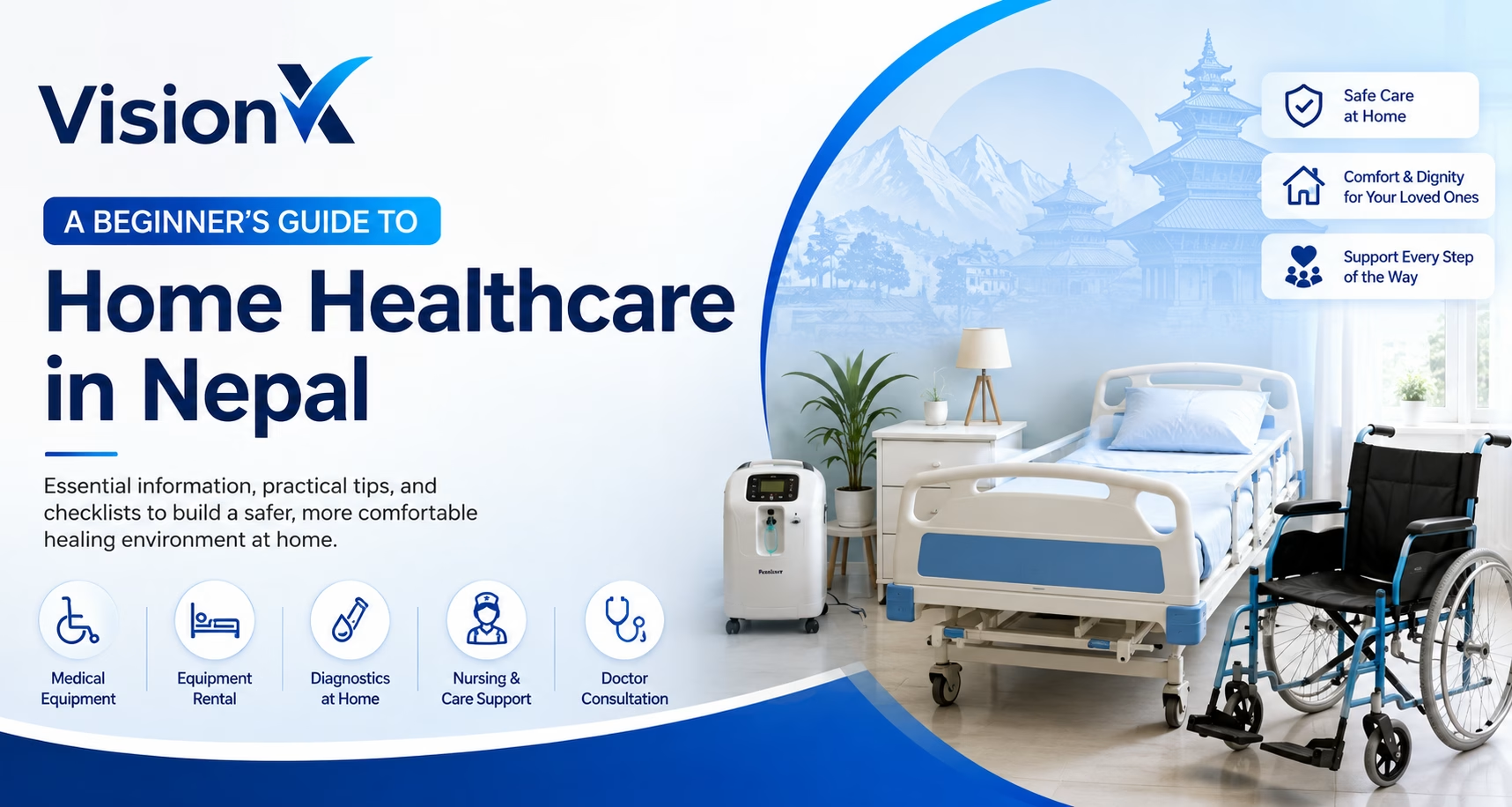
This guide explains the basic components of home healthcare in Nepal and practical considerations for creating a safe and manageable home-care environment.
What Is Home Healthcare?
Home healthcare broadly refers to healthcare-related support provided in a patient's home rather than exclusively in a hospital or clinic.
Depending on the individual's needs and care plan, this may involve:
- Nursing and caregiver support: Assistance with appropriate daily-care activities and patient support.
- Medical equipment at home: Mobility aids, hospital beds, respiratory equipment, and monitoring devices where appropriate.
- At-home diagnostics: Home sample collection where the service is available.
- Rehabilitation support: Physiotherapy or other rehabilitation services when recommended by the patient's healthcare team.
- Follow-up care: Communication or appointments with the patient's healthcare providers.
Clinical Note: Home healthcare complements professional medical care; it does not replace appropriate hospital or emergency care. Treatment decisions, medication changes, and adjustments to prescribed medical equipment should be made by qualified healthcare professionals.
Assess the Patient's Immediate Needs
Before purchasing equipment or arranging additional help, identify what the patient actually needs assistance with.
Mobility
Can the patient walk independently? Do they need help transferring between a bed and wheelchair? Would a mobility aid make movement around the home easier?
Personal Care
Can the patient safely access the bathroom, eat, dress, and manage other everyday activities independently?
Prescribed Support
Has a healthcare professional recommended oxygen therapy, a hospital bed, mobility equipment, or another form of medical support?
Monitoring
Does the patient's care plan involve monitoring measurements such as blood pressure, blood glucose, or oxygen saturation?
Starting with these questions helps prevent families from purchasing equipment that isn't appropriate for the patient's actual needs.
Medical Equipment: Buying or Renting?
Depending on the patient's situation, home care may involve equipment such as:
- Wheelchairs
- Walkers and other mobility aids
- Hospital beds
- Oxygen concentrators
- CPAP or BiPAP machines
- Blood pressure monitors
- Pulse oximeters
- Orthopedic supports
The appropriate equipment depends on the patient's needs and, where relevant, professional recommendations.
Buying vs. Renting
For temporary recovery, renting may be worth considering. For longer-term requirements, purchasing may be more practical.
Rather than using a fixed rule for when one becomes cheaper than the other, compare the actual purchase price, rental period, maintenance, warranty, and expected duration of use.
| Factor | Renting | Buying |
|---|---|---|
| Useful when | Equipment is needed temporarily | Equipment is expected to be needed longer term |
| Upfront cost | Usually lower | Usually higher |
| After use | Equipment can be returned | Equipment remains with the owner |
| Storage | No long-term storage required | Storage may be needed |
| Long-term value | Depends on rental duration | May be more practical for extended use |
Prepare the Home Before Equipment Arrives
A little preparation can prevent major logistical problems.
Measure Doorways and Stairways
Hospital beds and other large equipment need sufficient access into the home.
Measure doorways, corridors, elevators, and stairways before ordering. This is especially important in multi-story homes and buildings with narrow staircases.
If delivery involves carrying equipment upstairs, discuss access requirements with the supplier beforehand.
Plan Power Backup for Essential Equipment
Some medical equipment requires electricity to operate.
For example, oxygen concentrators and electric hospital beds depend on electrical power while in use.
If a patient's prescribed equipment is medically essential, families should understand its power requirements and discuss an appropriate backup arrangement with the healthcare provider and equipment supplier.
Depending on the equipment and circumstances, a suitable inverter, UPS, generator, or other backup solution may be considered.
Power Safety: Do not assume that an ordinary household UPS or inverter can safely operate medical equipment. Check the equipment's rated power requirements and ensure that any backup system is appropriately sized.
Confirm Delivery and Setup
Before ordering large or powered medical equipment, confirm what the supplier's delivery service includes.
Ask whether the service provides:
- Home delivery
- Assembly or installation
- Basic operating instructions
- Equipment demonstration
- Support after installation
This can be particularly useful when equipment needs to be delivered to homes outside the Kathmandu Valley or carried through narrow stairways.
Keep Pathways Clear
Remove unnecessary obstacles from the route between the entrance, bedroom, bathroom, and other areas the patient will use.
For wheelchair users and people using walking aids, clear pathways and appropriate flooring can make everyday movement easier.
Home Nursing and Caregiver Support
Equipment is only one part of home healthcare.
Some patients may need assistance with daily activities or require professional nursing support.
Before arranging care, clarify:
- What tasks the person needs help with
- How many hours of support are required
- Whether nursing or general caregiving is appropriate
- What equipment the caregiver will need to use
- Who should be contacted if the patient's condition changes
It is important to distinguish between caregiving and clinical nursing. A caregiver should not be expected to perform medical procedures outside their training or authorization.
Diagnostic Services at Home
For patients who find travelling to a laboratory difficult, home sample collection can be a convenient option where available.
Before arranging a test, check whether preparation is required. Some laboratory tests may require fasting or other instructions.
Diagnostic results should be interpreted by an appropriate healthcare professional rather than used for self-diagnosis.
Emergency Preparedness
Families caring for someone at home should keep important information readily accessible.
- Patient's medical history
- Current medication list
- Doctor or healthcare-provider contact information
- Family emergency contacts
- Relevant equipment instructions
- Nearest hospital or emergency department details
Emergency Contacts in Nepal
- Ambulance: 102
- Nepal Police: 100
- Health Emergency Operation Center (HEOC) Hotline: 1115
Keep the attending healthcare provider's contact information and the nearest appropriate emergency facility's details available as well.
If the patient's condition suddenly becomes serious or life-threatening, seek appropriate emergency medical assistance rather than attempting to manage the situation with home equipment alone.
7-Step Home Healthcare Setup Checklist
| Step | What to Do |
|---|---|
| 1. Clarify needs | Identify the patient's mobility, daily-care, and healthcare requirements. |
| 2. Confirm professional advice | Check equipment and treatment requirements with the appropriate healthcare professional. |
| 3. Inspect the home | Measure doorways, stairways, corridors, and available space. |
| 4. Plan power backup | Understand the electrical requirements of essential motorized equipment. |
| 5. Compare buying vs. renting | Consider expected duration, cost, maintenance, and storage. |
| 6. Arrange appropriate support | Determine whether the patient needs family assistance, caregiving, or professional nursing. |
| 7. Prepare for emergencies | Keep medical information, contacts, equipment instructions, and emergency numbers accessible. |
The Role of Digital Healthcare Platforms
Arranging home healthcare can involve several different needs: medical equipment, equipment rentals, diagnostic services, doctor consultations, and home-care support.
Digital healthcare platforms can help bring some of these services and logistics together.
VisionX provides access to medical equipment and rental services, along with healthcare-related services including diagnostics, doctor consultations, and home nursing or caregiver connections.
The role of a healthcare platform is primarily to help coordinate services and logistics. It should not be considered a substitute for a hospital, emergency service, or qualified healthcare professional.
Final Thoughts
Home healthcare becomes easier to manage when families approach it step by step.
Start by understanding the patient's needs. Confirm medical requirements with the appropriate professionals. Then consider the equipment, caregivers, home environment, electricity requirements, and logistics needed to support care.
For families in Nepal, practical considerations such as narrow stairways, room dimensions, power interruptions, equipment delivery, and installation can be just as important as selecting the equipment itself.
Good preparation can make home care more organized and comfortable while reducing avoidable logistical problems.
Most importantly, home healthcare should support an appropriate clinical care plan—not replace professional medical care.