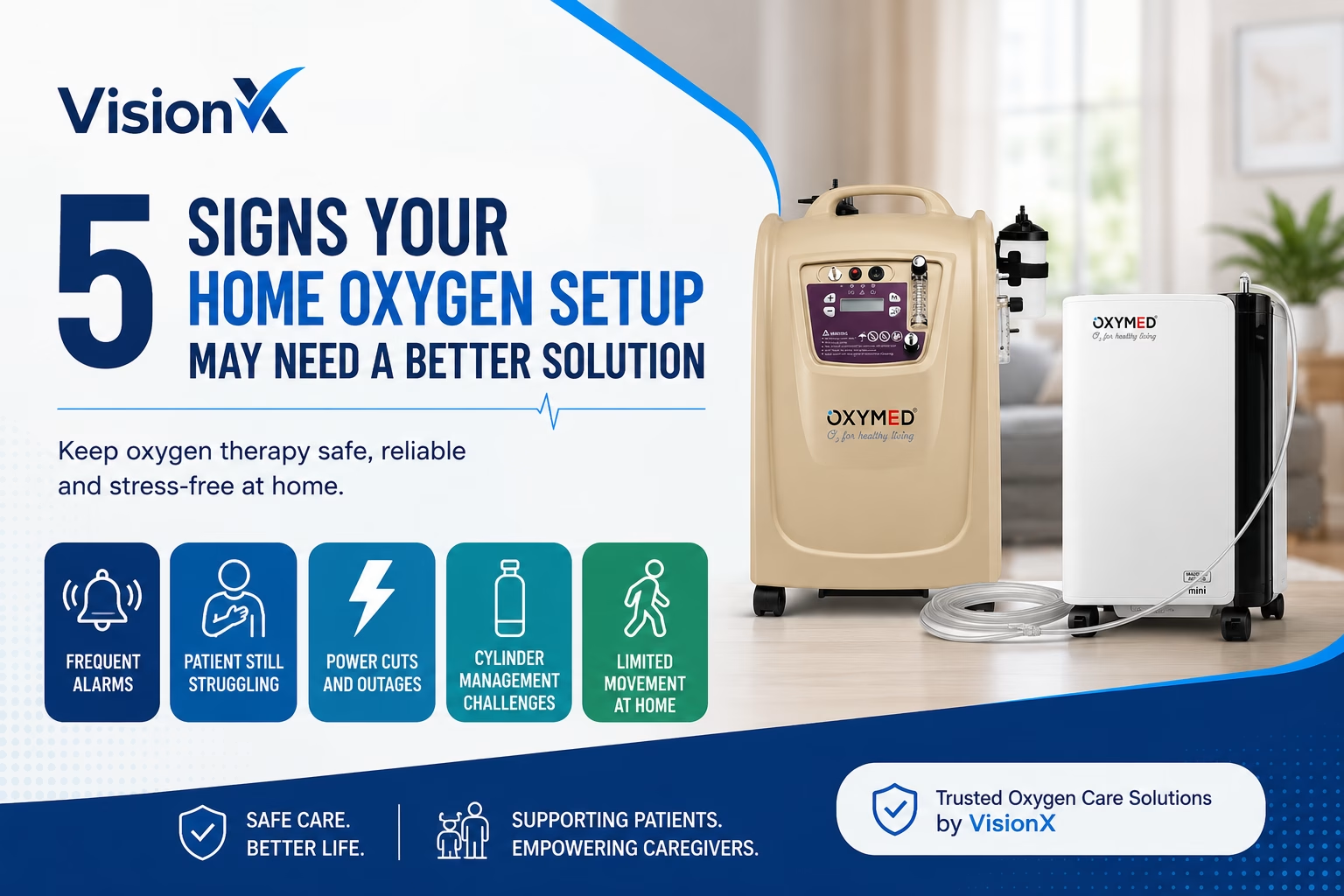
5 Signs Your Home Oxygen Setup May Need a Better Solution
Bringing oxygen therapy into the home is a significant change for any family.
Along with the patient's treatment, there is now equipment to understand, tubing to manage, electricity to consider, and a caregiver who may need to keep everything running smoothly from one day to the next.
In the beginning, the arrangement may seem simple enough. But as time passes, small problems can become frustrating—or even concerning. A machine may start alarming more often. Power cuts may become a source of anxiety. Cylinder refills may turn into a regular logistical challenge. A patient who once moved comfortably around the house may find the equipment increasingly restrictive.
Not every problem means the equipment needs to be replaced. Sometimes the answer is proper maintenance, a safer arrangement, or a better backup plan.
But when the same problems keep coming back, it is worth taking a closer look at the overall setup.
Here are five signs that your home oxygen arrangement may need to be reviewed.
1. The Machine Keeps Alarming or Behaving Differently
Oxygen concentrators are designed with alarms and warning indicators to alert users when something needs attention.
Depending on the model, these warnings may relate to power interruptions, restricted airflow, overheating, low oxygen concentration, or another operating condition.
An occasional alarm is not necessarily a sign of a major failure. What deserves attention is a pattern of repeated alarms, unexpected shutdowns, overheating, unusual sounds, or persistent warning indicators.
What could be causing it?
There are several possibilities.
Dust and blocked filters can restrict airflow. Poor ventilation can cause the machine to run hotter than intended. Electrical problems, normal component wear, or an internal fault can also affect performance.
Some medical concentrators include an Oxygen Concentration Indicator (OCI) or another oxygen-purity monitoring system. These systems are designed to alert the user when measured oxygen concentration falls outside the range specified by the manufacturer.
The exact warning system differs from one machine to another, so it is important to follow the instructions for the particular model rather than relying on a general colour code or percentage.
What should you do?
Start with the manufacturer's troubleshooting instructions.
Check that the machine has adequate ventilation, that its air openings are not blocked, and that any user-serviceable filters are maintained as recommended.
If the problem continues, have the equipment inspected by a qualified technician or appropriate service provider.
For an older machine that has become increasingly unreliable, it may also be worth discussing whether replacement would be more sensible than repeated repairs.
The important point is simple: a recurring warning is something to investigate, not something to get used to.
2. The Patient Is Still Struggling Despite Following the Prescribed Oxygen Setting
For a caregiver, this can be one of the most worrying situations.
The equipment appears to be running. The prescribed setting is being followed. Yet the patient still seems breathless or uncomfortable.
Do not increase or decrease the prescribed oxygen flow without guidance from the treating healthcare professional.
A change in symptoms can have many causes. It may be related to the patient's medical condition, an equipment problem, or something else that needs to be assessed.
Start with the obvious equipment checks
If appropriate, check whether:
- The tubing is kinked
- A connection has come loose
- The nasal cannula has moved out of position
- There is excessive condensation in the tubing
- The machine is showing an alarm or warning
- The concentrator sounds or operates differently than usual
These checks can help identify a straightforward equipment issue, but they do not replace medical assessment.
If the patient develops severe or worsening breathlessness, chest pain, confusion, unusual drowsiness, blue or grey lips or skin, or other serious symptoms, seek urgent medical attention.
A pulse oximeter can provide useful information about oxygen saturation, but the reading should be considered alongside the patient's symptoms and medical circumstances.
Be careful when comparing products
The term “oxygen machine” is used for many different products online.
Some devices marketed for personal or wellness use are not intended to provide prescribed medical oxygen therapy. Their output, monitoring systems, specifications, and intended use may differ considerably from those of medical oxygen concentrators.
For a patient who has been prescribed oxygen, equipment should be appropriate for medical use and suitable for the prescribed treatment.
A higher advertised output does not automatically make a machine the better choice.
3. Power Cuts Have Become a Constant Source of Anxiety
For families using an electric oxygen concentrator, electricity is part of the treatment setup.
That can be easy to overlook until the power goes out.
In homes that experience frequent or unpredictable interruptions, a concentrator can become a source of concern if there is no reliable backup plan.
The problem is often not the concentrator itself. It is the assumption that an existing inverter, UPS, or battery system will automatically be able to handle it.
Why can backup systems struggle?
Oxygen concentrators use compressors and other electrical components, and their power requirements vary between models.
The machine may also require more power when starting than it uses during normal operation.
An inverter that comfortably handles lights, a television, or a computer may therefore trip when a concentrator starts or may provide much less battery runtime than expected.
Do not rely on a generic VA rating alone. Check the specific concentrator's electrical requirements and startup characteristics before choosing backup power.
What should families plan for?
A realistic backup plan should consider:
- The concentrator's normal power requirement
- Startup or surge demand
- Battery capacity
- Expected outage duration
- Other appliances connected to the backup system
- Compatibility between the backup equipment and the concentrator
A suitably designed pure-sine-wave inverter may be appropriate for some installations, but the correct capacity depends on the equipment and the electrical setup.
It is also worth thinking beyond the inverter.
If an outage lasts longer than the available battery backup, what happens next?
Depending on the patient's circumstances and medical plan, an emergency oxygen source may be an important part of the household's contingency plan.
The best time to test an oxygen backup plan is before the next power cut—not during one.
4. Managing Oxygen Cylinders Has Become a Regular Burden
Oxygen cylinders can play an important role in home oxygen care. In some situations, they may also provide valuable backup when electricity is unavailable.
But regular cylinder use can create a considerable amount of work for a family.
Someone has to keep track of the remaining supply, arrange refills, organize transportation, manage storage, and make sure there is enough oxygen available when it is needed.
For a caregiver already handling medications, appointments, meals, and other responsibilities, that can become exhausting.
When does it become a problem?
You may need to reconsider the arrangement if your family is regularly dealing with:
- Frequent refill requests
- Difficulty transporting cylinders
- Several cylinders taking up household space
- Uncertainty about how much oxygen remains
- Emergency refill arrangements
- Physical difficulty moving cylinders
- Anxiety about running out
These are not necessarily signs that cylinders are unsuitable. They may simply indicate that the current arrangement is becoming impractical.
Could another arrangement be easier?
For some patients receiving longer-term oxygen therapy, a stationary oxygen concentrator can reduce the need for regular cylinder refills.
Instead of storing a finite supply of compressed oxygen, a concentrator produces an oxygen-enriched output from room air while it has a suitable power supply.
That can make day-to-day management easier in some homes.
There is a trade-off, however: a concentrator depends on electricity.
For this reason, some households may use a concentrator as a primary source while maintaining an appropriate emergency backup. Other patients may have different requirements.
The question is not whether a concentrator is always better than a cylinder.
The better question is:
Which arrangement is appropriate for the patient's prescribed therapy and practical circumstances?
5. The Patient Has Difficulty Moving Around the Home
Medical equipment can be essential without being convenient.
A patient may initially manage well with their oxygen arrangement but later find that it interferes with normal movement around the house.
Perhaps the tubing does not reach the bathroom comfortably. Perhaps it creates a trip hazard. Or perhaps the equipment has gradually confined the patient to one part of the home.
These seemingly small frustrations can have a real effect on daily life.
Look at the setup, not just the machine
Before replacing equipment, take a look at how everything is arranged.
Ask:
- Is the tubing suitable for the area where the patient needs to move?
- Is it routed safely?
- Does it create a trip hazard?
- Are the connections secure?
- Is the concentrator positioned appropriately?
- Can the patient move without repeatedly pulling on the tubing?
Longer tubing can sometimes make movement around the home easier, but it should be appropriate for the specific equipment and used according to the manufacturer's recommendations.
There is no single tubing length that works for every concentrator. Tubing diameter, connectors, flow requirements, and device design can all affect performance.
Safety matters just as much as convenience. A longer tube is not helpful if it creates a new fall hazard.
What about going outside the home?
For patients who need oxygen away from home, portable oxygen equipment may offer greater flexibility.
Whether it is appropriate depends on the patient's prescribed therapy and individual circumstances, so this is something to discuss with the treating healthcare professional.
The objective should be to find a practical solution—not simply the smallest or most portable device available.
Before You Replace Anything, Find the Real Problem
When home oxygen becomes difficult to manage, the first instinct may be to look for a new machine.
Sometimes that is the right answer.
But sometimes the equipment is fine and something else needs to change.
Before replacing anything, ask five simple questions:
Is the machine reliable?
Look for repeated alarms, unexpected shutdowns, overheating, or other changes in normal operation.
Has the patient's situation changed?
If the patient's condition or prescribed oxygen therapy has changed, speak with the treating healthcare professional rather than changing the oxygen setting yourself.
Can the home support the equipment?
Consider electricity, backup power, ventilation, space, and the practical environment where the equipment is being used.
Has oxygen supply management become difficult?
If cylinder refills are becoming a constant logistical problem, discuss whether another arrangement might be appropriate.
Does the setup still work for everyday life?
Think about movement, tubing safety, caregiver workload, and what happens during a power interruption.
These questions can help identify whether the problem is the machine, its maintenance, the surrounding setup, or the household's changing needs.
When Is It Time to Reconsider the Current Arrangement?
Not every inconvenience calls for new equipment.
A service visit may solve the problem. A filter may need attention. The machine may need better ventilation. The backup-power system may need to be reviewed. Tubing may simply need to be repositioned.
However, it may be time to reassess the arrangement when:
- Equipment problems keep returning
- The machine frequently alarms or shuts down
- The equipment has become difficult to maintain
- Power interruptions repeatedly disrupt oxygen use
- Cylinder management has become stressful
- The patient's mobility needs have changed
- Caregivers are struggling with the current arrangement
- The equipment no longer appears appropriate for the prescribed therapy
- Reliable servicing or technical support is becoming difficult to obtain
The first step is to understand what is no longer working and why.
Only then does it make sense to consider whether the answer is servicing, a change in the setup, additional backup, or different equipment.
What Does a Better Home Oxygen Setup Look Like?
There is no single setup that works for every household.
A good arrangement should make sense medically while remaining manageable in everyday life.
Five things are worth considering:
- Reliability: The equipment should operate consistently and be maintained properly.
- Medical suitability: It should be appropriate for the patient's prescribed oxygen therapy.
- Power planning: The family should know what will happen if normal electricity is unavailable.
- Safe use: Equipment, tubing, and placement should not introduce unnecessary hazards.
- Ongoing support: Servicing and technical assistance should be available when needed.
These factors are often more useful than choosing equipment based on price or one impressive specification.
Final Thoughts
Home oxygen therapy becomes part of everyday life—not just part of a treatment plan.
That means the practical side matters.
A machine that works well but repeatedly fails during power cuts may not be a complete solution. A cylinder arrangement that technically meets the need but leaves a caregiver constantly arranging refills may not be sustainable. And equipment that keeps a patient unnecessarily confined to one room may need to be reconsidered.
The answer is not always a new machine.
Sometimes better maintenance is enough. Sometimes the power backup needs attention. Sometimes the equipment needs to be arranged differently. And sometimes a different oxygen delivery option may make more sense.
The most useful question is therefore not:
“Which oxygen machine should we buy?”
It is:
“What problem are we actually trying to solve?”
Once that is clear, families can have a much more productive conversation with their healthcare professional and equipment provider about the right solution.
For families researching home oxygen equipment, VisionX's oxygen concentrator range can be a useful starting point for exploring available options. The final equipment choice should always take the patient's prescribed therapy and professional guidance into account.
Frequently Asked Questions
What are the most common signs that a home oxygen setup needs attention?
Repeated equipment alarms, unexpected shutdowns, unreliable power, difficulty managing oxygen supplies, and problems moving safely around the home are some of the common signs that the arrangement may need to be reviewed.
Should I increase the oxygen flow if the patient remains breathless?
No. Do not change the prescribed oxygen flow without guidance from the treating healthcare professional. Persistent or worsening breathlessness may require medical assessment.
What should I check if my oxygen concentrator starts alarming?
Follow the manufacturer's troubleshooting instructions and check for obvious issues such as restricted airflow, filter maintenance, overheating, or power problems. If the warning continues, arrange professional inspection.
Can an oxygen concentrator operate during a power cut?
A standard electric concentrator requires a suitable power source. Families who depend on one should have a backup plan appropriate for the specific equipment and the patient's circumstances.
Is an oxygen concentrator always better than an oxygen cylinder?
No. Each option has advantages and limitations. A concentrator can reduce the need for refills but depends on electricity. Cylinders provide stored oxygen but need to be replaced or refilled. The appropriate arrangement depends on the patient's therapy and situation.
Are all oxygen machines sold online suitable for medical use?
No. Some devices marketed for personal or wellness use are not designed for prescribed medical oxygen therapy. Check the device's intended use and specifications before relying on it for medical care.
Can longer tubing make oxygen therapy easier at home?
It can sometimes improve movement around the home, but tubing must be appropriate for the equipment and routed safely. Follow the manufacturer's recommendations and avoid creating trip hazards.
Should an older oxygen concentrator automatically be replaced?
Not necessarily. Age alone does not determine whether a machine needs replacement. Reliability, maintenance requirements, performance, availability of servicing, and the patient's current needs are more important factors to consider.