
Oxygen Concentrator vs Oxygen Cylinder: What’s the Difference?
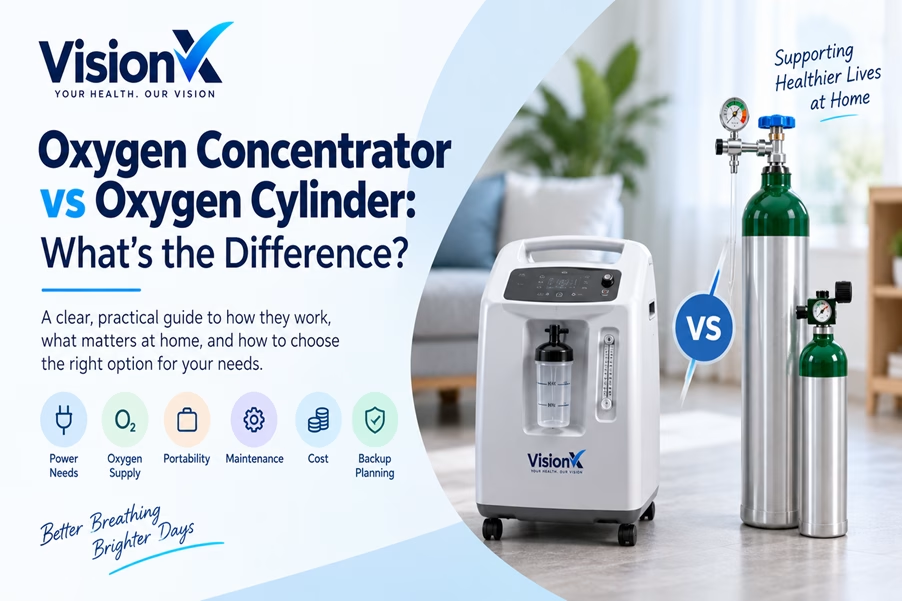
An oxygen concentrator is an electrically powered medical device that draws in surrounding air and concentrates oxygen for prescribed therapy. An oxygen cylinder is a pressurized container holding a finite supply of compressed oxygen that must be replaced or refilled when depleted.
Both can deliver supplemental oxygen, but they work differently. The practical differences come down to how oxygen is supplied, whether electricity is required, how the equipment is moved and maintained, and what happens when the supply or power source is interrupted.
For home oxygen therapy, the right setup depends on the person’s prescription, daily oxygen needs, mobility, electricity reliability, access to refills, and the equipment recommended by the treating healthcare professional.
Oxygen Concentrator vs Oxygen Cylinder at a Glance
| Feature | Oxygen Concentrator | Oxygen Cylinder |
|---|---|---|
| Oxygen source | Concentrates oxygen from surrounding air | Stores compressed oxygen |
| Electricity | Required for operation | Not required to release stored oxygen |
| Oxygen supply | Produces oxygen while operating | Finite stored supply |
| Refilling | Does not require oxygen refilling | Requires replacement or refilling |
| Power-cut concern | Needs a backup plan | Can continue supplying stored oxygen without household electricity |
| Portability | Depends on the model | Depends on cylinder size and setup |
| Maintenance | Cleaning, filters, servicing, and equipment checks | Cylinder, valve, regulator, storage, and refill management |
| Long-term home use | Practical where electricity is reliable | Practical where refill access is reliable |
| Backup role | May need backup power or another oxygen source | Can serve as a backup when clinically appropriate |
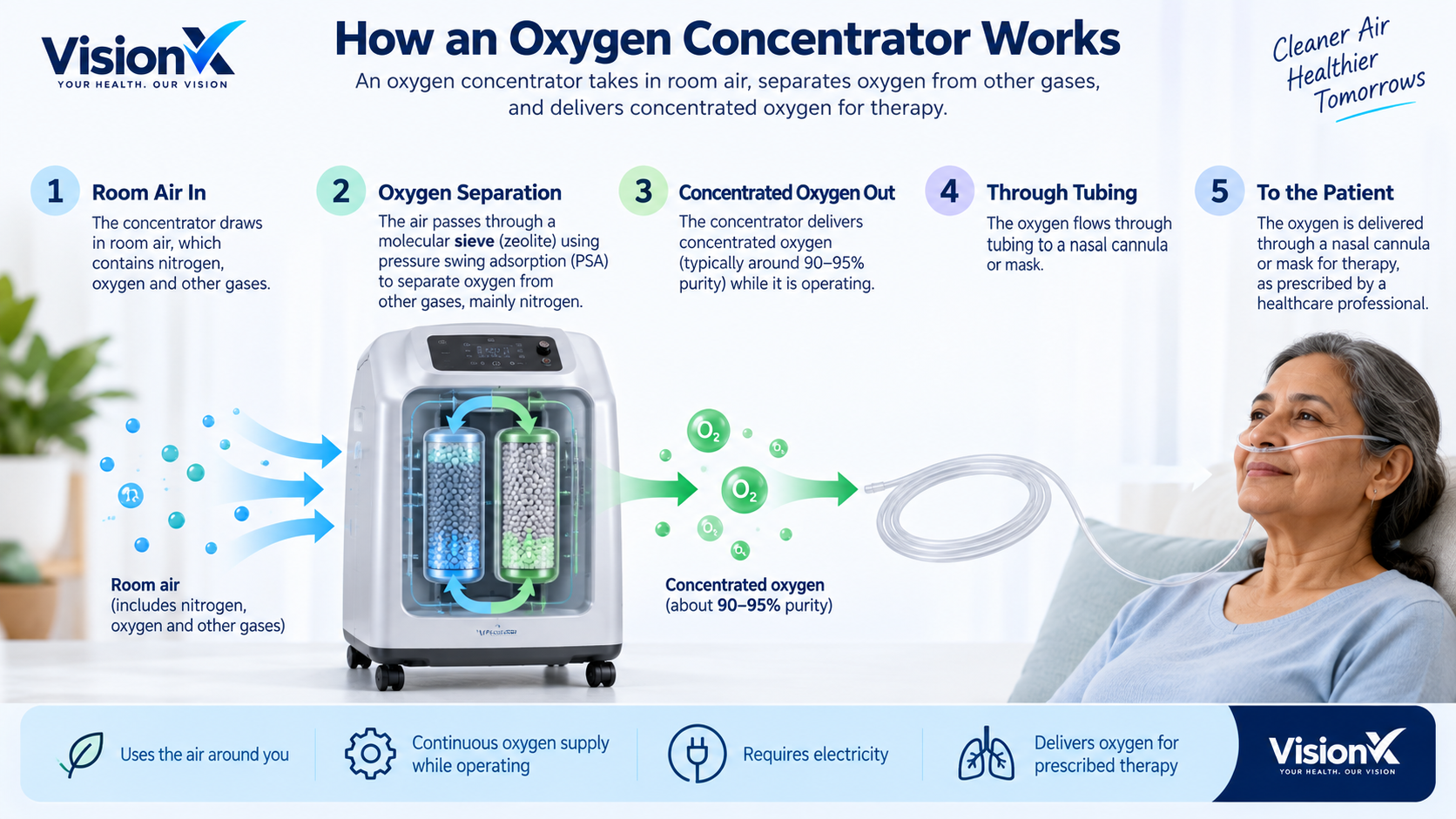
How an Oxygen Concentrator Works
An oxygen concentrator takes in room air and uses a process called pressure swing adsorption (PSA) to separate oxygen from other gases. Molecular sieve material, commonly a type of zeolite, helps concentrate the oxygen before delivering it to the user.
The basic process is:
Room air → Concentrator → Concentrated oxygen → Tubing → Nasal cannula or mask
Unlike a cylinder, a concentrator does not hold a fixed supply of compressed oxygen. It produces concentrated oxygen while it is operating and has an appropriate power source.
Concentrators are available in different configurations and flow capacities. However, a device’s maximum flow rating is not the same thing as a patient’s prescribed oxygen flow. A concentrator capable of delivering 5 or 10 L/min does not mean the person should receive that amount. The prescribed flow should come from the treating healthcare professional.
The World Health Organization recommends considering appropriate selection, use, maintenance, and power requirements when oxygen concentrators are used as part of an oxygen system.
How an Oxygen Cylinder Works
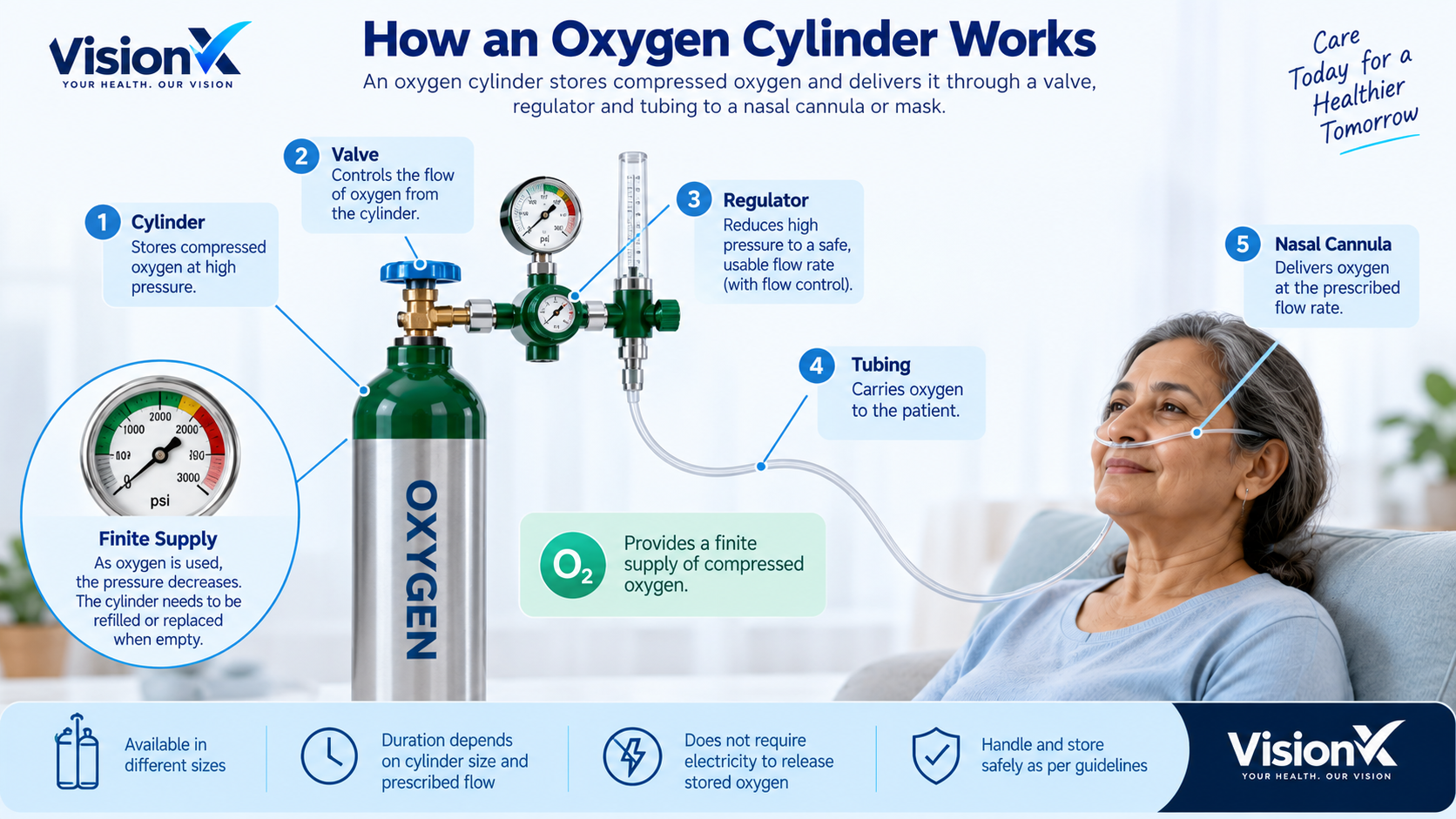
An oxygen cylinder stores a finite amount of compressed oxygen under pressure.
A typical setup includes:
Cylinder → Valve → Regulator/flow control → Tubing → Nasal cannula or mask
As oxygen is used, the amount remaining in the cylinder decreases. Once the supply is depleted, the cylinder needs to be replaced or refilled through the appropriate supplier.
How long a cylinder lasts depends on factors such as its capacity, pressure, and prescribed oxygen flow. A smaller cylinder may be easier to carry but contains less oxygen than a larger cylinder.
A cylinder does not require household electricity to release its stored oxygen. It does, however, require the correct regulator and flow-control equipment and must be handled and stored safely.
The Differences That Matter at Home
Electricity and Power Dependence
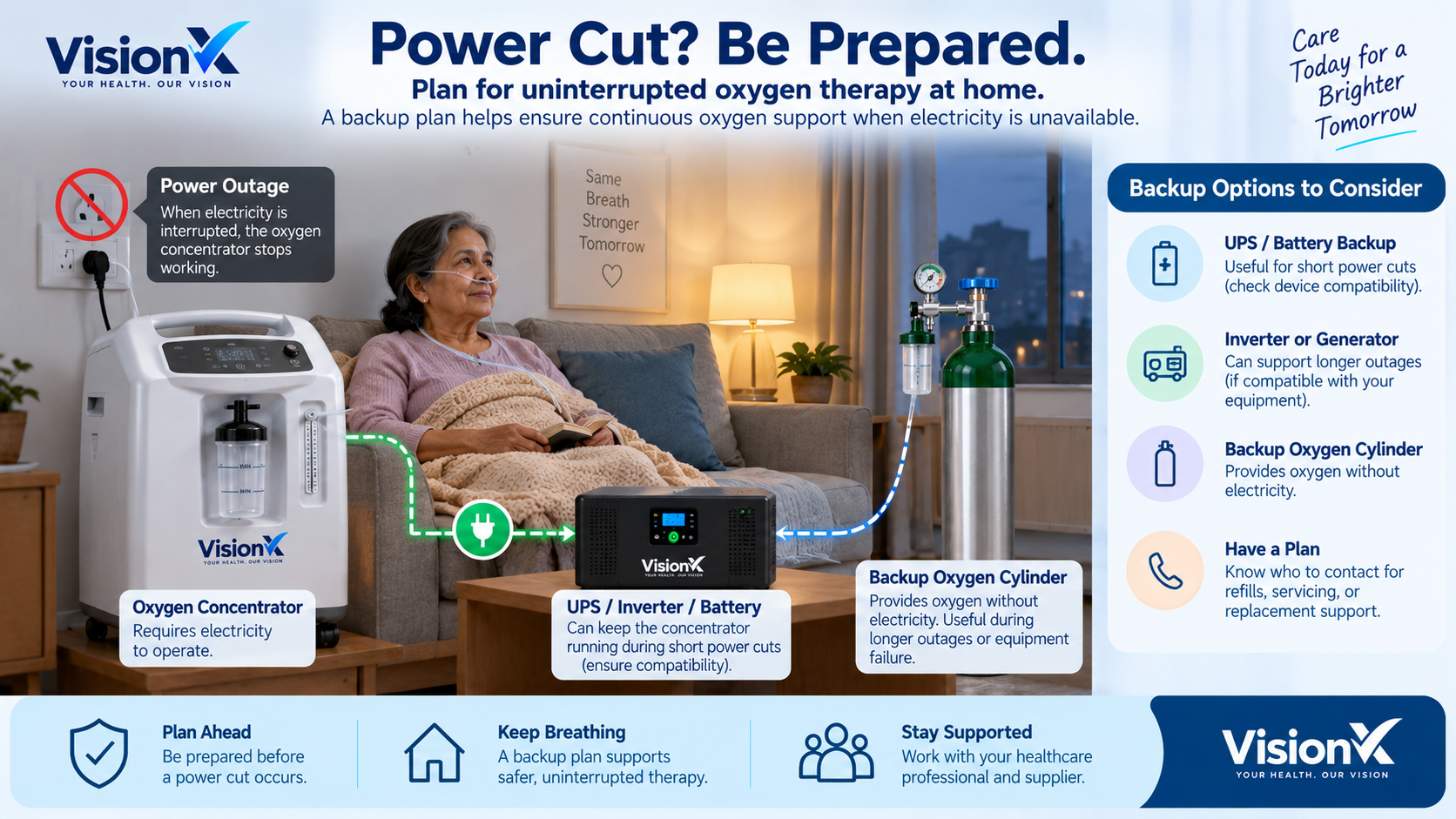
A stationary oxygen concentrator depends on electricity to operate. If household power is interrupted, the concentrator cannot continue producing oxygen unless it has a compatible backup power arrangement.
Depending on the equipment and circumstances, backup planning may involve an appropriate battery system, UPS, inverter, generator, or another oxygen source.
Do not assume that any backup power device will work with every concentrator. Check the specific manufacturer’s electrical requirements, including operating and startup power requirements, before choosing a backup system.
Reliable power and maintenance are important considerations when using oxygen concentrators at home.
Oxygen Supply and Refilling
A concentrator produces oxygen while it is operating. A cylinder provides oxygen from a finite stored supply.
This creates different responsibilities for the household:
- With a concentrator, you need reliable electricity and appropriate equipment maintenance.
- With a cylinder, you need to monitor the remaining supply and arrange timely replacement or refilling.
- If oxygen delivery or refilling is not immediately available, supply planning becomes particularly important.
The practical choice can therefore depend not only on the equipment itself but also on the reliability of local electricity and oxygen supply services.
Portability
Portability depends on the specific equipment.
Stationary concentrators are generally intended to remain in one location. Portable oxygen concentrators are smaller and may operate from batteries, but their oxygen-delivery modes vary. Some provide continuous flow, while many use pulse-dose delivery.
Cylinders are also available in different sizes. Smaller cylinders may be easier to transport, but they contain less oxygen and may need to be replaced more frequently.
When mobility matters, consider:
- Equipment weight
- Cylinder capacity or battery life
- Continuous-flow versus pulse-dose delivery
- How long you will be away from home
- Whether the equipment can meet the prescribed oxygen requirement
- How easily the equipment can be transported
The smallest or lightest option is not automatically the most appropriate one.
Maintenance
Oxygen concentrators require routine care such as cleaning, filter maintenance, tubing checks, alarm checks, and servicing according to the manufacturer’s instructions.
Cylinders require attention to the cylinder itself, valves, regulators, safe storage, and timely refilling or replacement.
For either system, follow the manufacturer’s maintenance instructions and use qualified service support when required.
Which Option Fits Different Home Situations?
Regular Home Oxygen Therapy
A stationary concentrator can be practical for someone who has been prescribed oxygen for extended periods at home or during sleep, provided electricity is reliable and the device can meet the prescribed requirement.
The key is to match the equipment to the prescription, rather than simply choosing the device with the highest flow rating.
Temporary or Short-Term Use
If oxygen equipment is needed for a limited period, renting may be a practical option depending on local availability and the circumstances.
The same safety principle still applies: the equipment and prescribed flow should match the person’s clinical requirements. Oxygen should not be started, stopped, or adjusted without appropriate professional guidance.
Transport and Mobility
People who need oxygen outside the home may use a portable oxygen concentrator, portable cylinder, or a combination of a stationary concentrator and a portable oxygen source.
The appropriate setup depends on the prescribed delivery method, how long the person will be away from home, equipment weight, battery capacity, and the practical requirements of travel.
When Electricity Is Unreliable
A stationary concentrator cannot produce oxygen during a power interruption unless an appropriate backup system keeps it operating.
Planning may involve:
- Compatible backup power
- A backup oxygen cylinder or other suitable oxygen source
- A plan for longer outages
- Access to equipment servicing or replacement
The right arrangement depends on the person’s oxygen requirement, expected outage duration, available backup options, and the specific equipment being used.
Backup Planning: The Hybrid Home Oxygen Setup
Home oxygen does not always have to be an either-or decision.
In some situations, a hybrid setup may involve a concentrator as the primary source together with an appropriate backup oxygen source or compatible backup power.
For example, a standby cylinder may be considered for a prolonged power interruption or concentrator failure when clinically appropriate.
A useful backup plan should consider:
- The prescribed oxygen requirement
- How long an outage could last
- How quickly replacement oxygen can be obtained
- Whether backup power is compatible with the concentrator
- Who to contact if the primary equipment fails
The goal is to plan for an interruption before the primary oxygen source becomes unavailable.
What Happens During a Power Cut?
A stationary oxygen concentrator stops producing oxygen when it loses electrical power.
For someone who depends on oxygen therapy, this makes backup planning important. Depending on the prescribed therapy and circumstances, the backup may involve a suitable oxygen cylinder, compatible backup power, or another clinically appropriate arrangement.
If you are considering an inverter, UPS, generator, or battery system, check the requirements of the specific concentrator model. Do not choose a backup system based only on its advertised wattage.
People who require continuous oxygen should have an appropriate backup plan in place before a power interruption occurs. The American Lung Association also recommends discussing emergency oxygen supplies that do not require electricity with the oxygen supplier when power outages could interrupt therapy.
Oxygen Safety at Home
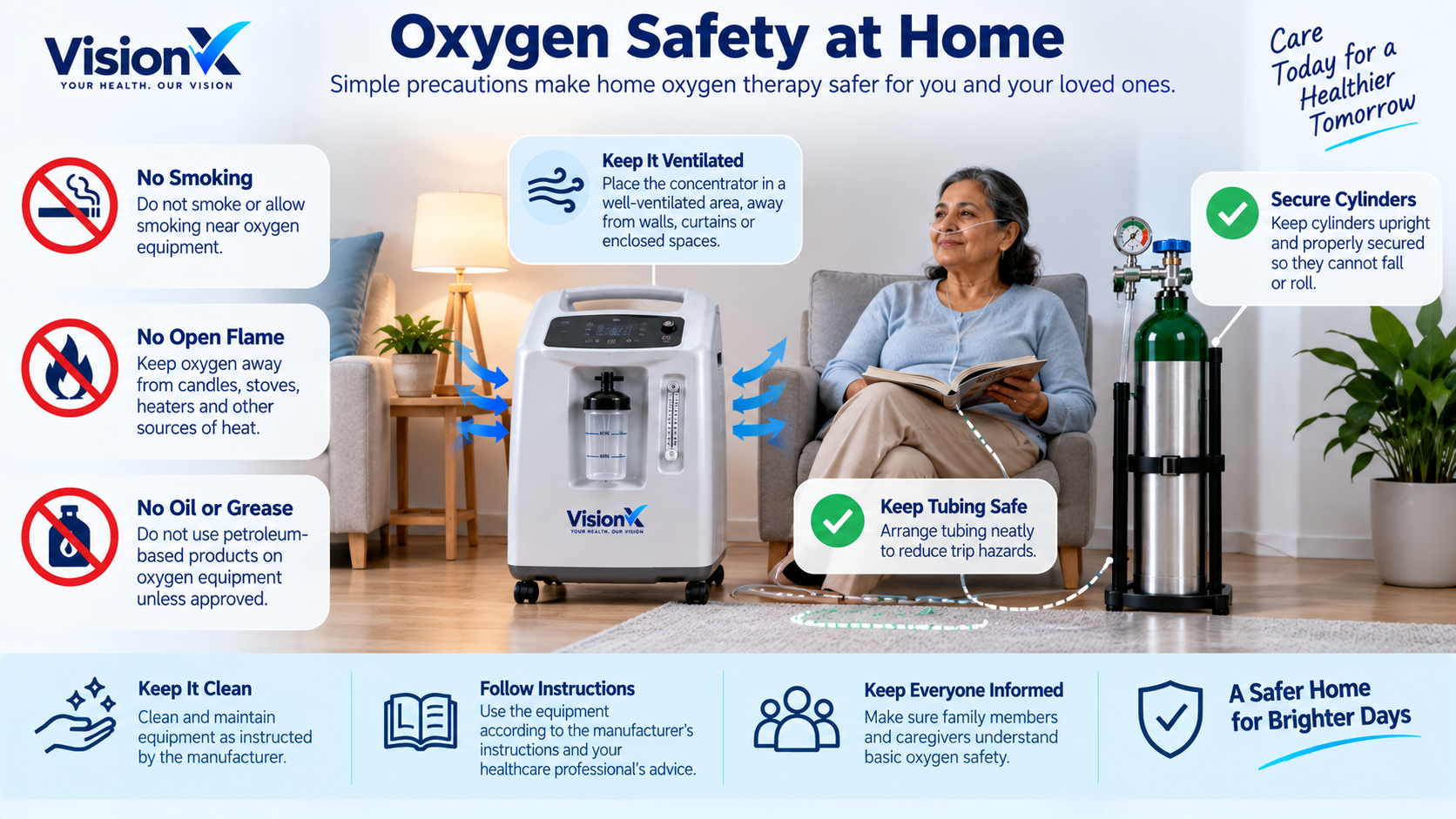
Oxygen itself is not flammable, but it supports combustion, which means materials can ignite more easily and burn more intensely in an oxygen-enriched environment.
Important precautions include:
- Do not smoke or allow smoking near oxygen equipment.
- Keep oxygen away from open flames, gas stoves, candles, heaters, and other sources of heat.
- Do not use petroleum-based products, oil, or grease on oxygen equipment unless specifically approved.
- Keep oxygen tubing positioned safely to reduce trip hazards.
- Secure cylinders properly so they cannot fall or roll.
- Keep a concentrator adequately ventilated and follow the manufacturer’s placement instructions.
- Clean and maintain equipment according to the manufacturer’s instructions.
- Never change the prescribed oxygen flow simply because symptoms change or because you want to make the oxygen supply last longer.
Humidifier Use
Some oxygen setups include a humidifier when it is clinically appropriate.
If your equipment uses a humidifier:
- Follow the equipment manufacturer’s instructions for water type.
- Some systems specify sterile or distilled water.
- Do not automatically assume tap water is suitable.
- Fill the humidifier only to the recommended level.
- Keep it correctly connected so water does not enter the tubing.
- Clean and replace the humidifier according to the recommended schedule.
The equipment manufacturer’s instructions and the healthcare professional’s guidance should take priority for the specific setup.
Cost: Buying, Renting, and Ongoing Expenses
The initial price of oxygen equipment is only part of the cost.
For a concentrator, consider:
- Purchase or rental cost
- Electricity consumption
- Filters and replacement parts
- Tubing and accessories
- Servicing
- Backup power or backup oxygen arrangements
For a cylinder, consider:
- Purchase or rental cost
- Oxygen refills
- Delivery or collection
- Regulator and accessories
- Safe storage
- Replacement or servicing requirements
For short-term needs, renting may make practical sense. For longer-term use, it can be useful to compare the total cost over the expected period rather than looking only at the initial purchase price.
What to Check Before Buying or Renting
Before choosing an oxygen concentrator or cylinder, consider these questions:
- What oxygen flow has been prescribed?
- How many hours a day is oxygen required?
- Is reliable electricity available?
- Does the person need oxygen outside the home?
- What happens if the primary equipment fails?
- How easily can oxygen be refilled or replacement equipment obtained?
- Would renting or buying make more sense for the expected duration?
- Does the equipment actually match the prescribed therapy?
Do not choose an oxygen device simply because it has a higher maximum flow. The equipment’s capacity and the patient’s prescribed requirement are two different things.
When Should Oxygen Therapy Be Reviewed?
Oxygen therapy should be reviewed with a healthcare professional when:
- The prescribed oxygen requirement changes.
- Breathing becomes significantly or repeatedly worse.
- You are unsure what oxygen flow has been prescribed.
- Equipment cannot reliably provide the prescribed therapy.
- A new medical condition develops or there is a significant change in the person’s condition.
- You are considering switching to a different type of oxygen equipment.
- Oxygen was prescribed temporarily and you are unsure whether it is still needed.
Do not increase or decrease the prescribed oxygen flow on your own.
Seek urgent medical attention for severe or rapidly worsening breathing difficulty, new confusion or unusual drowsiness, blue or grey discoloration of the lips or skin, chest pain, or other serious symptoms.
Oxygen Concentrator vs Oxygen Cylinder FAQs
Is an oxygen concentrator better than an oxygen cylinder?
Neither is universally better. A concentrator produces oxygen while connected to power, while a cylinder stores a finite oxygen supply. The appropriate option depends on the prescribed therapy and the person’s home, mobility, power, and supply circumstances.
Does an oxygen concentrator need electricity?
Yes. A stationary oxygen concentrator requires electrical power to operate and produce concentrated oxygen.
How long does an oxygen cylinder last?
It varies according to the cylinder’s capacity, pressure, and prescribed oxygen flow. A supplier can help determine the expected duration for a specific cylinder and flow rate.
What happens if the power goes out while using a concentrator?
The concentrator stops producing oxygen unless an appropriate backup power source keeps it operating. People who depend on oxygen should have a suitable backup plan.
Can an oxygen cylinder be used as a backup for a concentrator?
It can be an appropriate backup in some situations, provided the cylinder, regulator, and delivery setup are suitable for the person’s prescribed oxygen therapy and the arrangement has been discussed with the appropriate healthcare professional or oxygen supplier.
Which is more portable: a concentrator or a cylinder?
It depends on the specific equipment. Portable oxygen concentrators may be designed for mobility, while smaller cylinders can also be carried. Delivery mode, battery life, cylinder capacity, weight, and the prescribed oxygen requirement all matter.
Can I change my oxygen flow if I feel short of breath?
No. Do not change the prescribed oxygen flow on your own. If your breathing changes or the prescribed flow no longer seems adequate, contact your healthcare professional.
Can I use an inverter, generator, or UPS with an oxygen concentrator?
Potentially, but compatibility depends on the specific concentrator and backup power system. Check the manufacturer’s electrical requirements before connecting the equipment.
The Bottom Line
An oxygen concentrator uses electricity to extract and concentrate oxygen from surrounding air. An oxygen cylinder stores a finite supply of compressed oxygen.
The practical decision is not simply about which device is more powerful or convenient. It starts with the prescribed oxygen therapy, then considers electricity reliability, mobility, oxygen supply and refilling, maintenance, cost, and backup planning.
For some home setups, a concentrator may serve as the primary source with an appropriate backup arrangement. In other situations, a cylinder may better suit portability, temporary use, or emergency planning.
The most important step is to choose equipment that can reliably deliver the oxygen therapy that has been prescribed.
Medical Note
This article is for general educational purposes and does not replace medical advice, diagnosis, or a prescription. A qualified healthcare professional should determine whether oxygen therapy is appropriate, the required flow and duration, and the suitable delivery method.
Do not start, stop, or change oxygen therapy without appropriate professional guidance. If someone develops severe or rapidly worsening breathing difficulty, confusion, unusual drowsiness, blue or grey discoloration, chest pain, or other serious symptoms, seek urgent medical care.
Need help finding the right equipment?
VisionX can help you explore respiratory-care equipment, rental options, and delivery support in Nepal.
Explore oxygen concentrators, oxygen cylinders, and related respiratory-care equipment based on the existing prescription and practical requirements.