BiPAP vs CPAP: What’s the Difference?
CPAP and BiPAP are both forms of positive airway pressure (PAP) therapy, but they deliver pressure differently and may be used for different clinical needs.
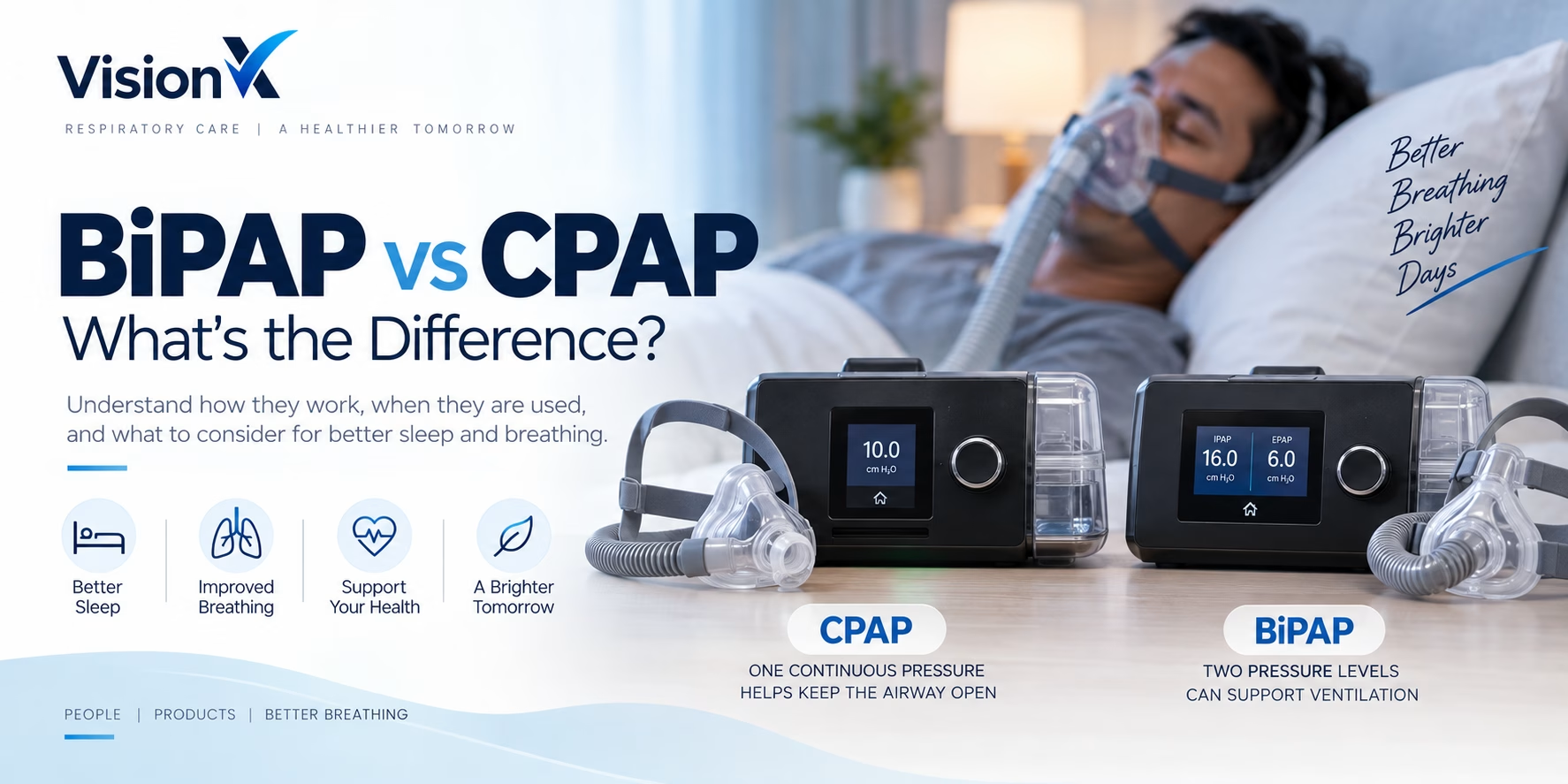
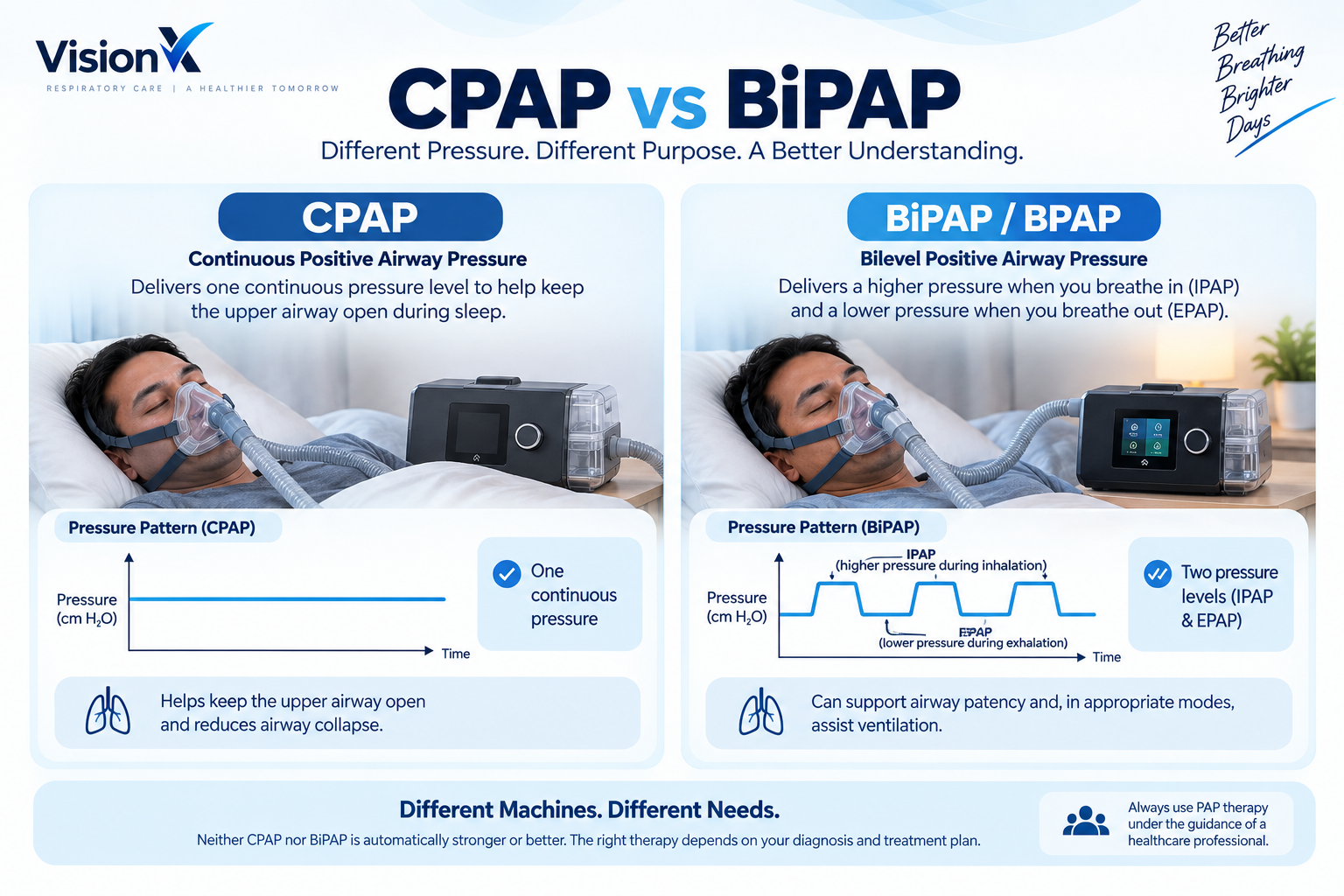
CPAP provides a continuous level of pressure to help keep the upper airway open during sleep. BiPAP, also called BPAP, provides one pressure when you breathe in and a lower pressure when you breathe out.
For routine obstructive sleep apnea (OSA), CPAP or APAP is generally preferred over BPAP. BiPAP is not simply a stronger or more advanced version of CPAP. It is a different form of PAP therapy that may be appropriate when a person has particular pressure-tolerance, ventilation, or breathing-support needs.
The important question is therefore not "Which machine is better?" but "Which type of PAP therapy matches the diagnosis and treatment plan?"
CPAP vs BiPAP at a Glance
| Feature | CPAP | BiPAP / BPAP |
|---|---|---|
| Full name | Continuous positive airway pressure | Bilevel positive airway pressure |
| Pressure delivery | One continuous pressure level | Higher pressure during inhalation and lower pressure during exhalation |
| Main purpose | Helps keep the upper airway open | Can support airway patency and, in appropriate modes, assist ventilation |
| Common use | Obstructive sleep apnea | Selected cases requiring bilevel support or different inspiratory/expiratory pressures |
| Backup rate | Usually not used | Available in some bilevel modes |
| Is it automatically "stronger"? | No | No |
| Should you choose it yourself? | No | No |
Typical pressure ranges vary by manufacturer, device, and operating mode. Device limits should not be confused with the pressure prescribed for an individual patient.
How CPAP and BiPAP Actually Work
CPAP: one continuous pressure
A CPAP machine uses a motor to deliver pressurized air through tubing and a mask. The pressure helps prevent the upper airway from collapsing during sleep.
The pressure is prescribed or adjusted according to the person's treatment needs. The goal is not to deliver the highest possible pressure, but enough pressure to control the airway obstruction while maintaining effective and tolerable therapy.
BiPAP or BPAP: two pressure levels
BiPAP provides two pressure levels:
- IPAP (inspiratory positive airway pressure): the higher pressure delivered during inhalation.
- EPAP (expiratory positive airway pressure): the lower pressure maintained during exhalation.
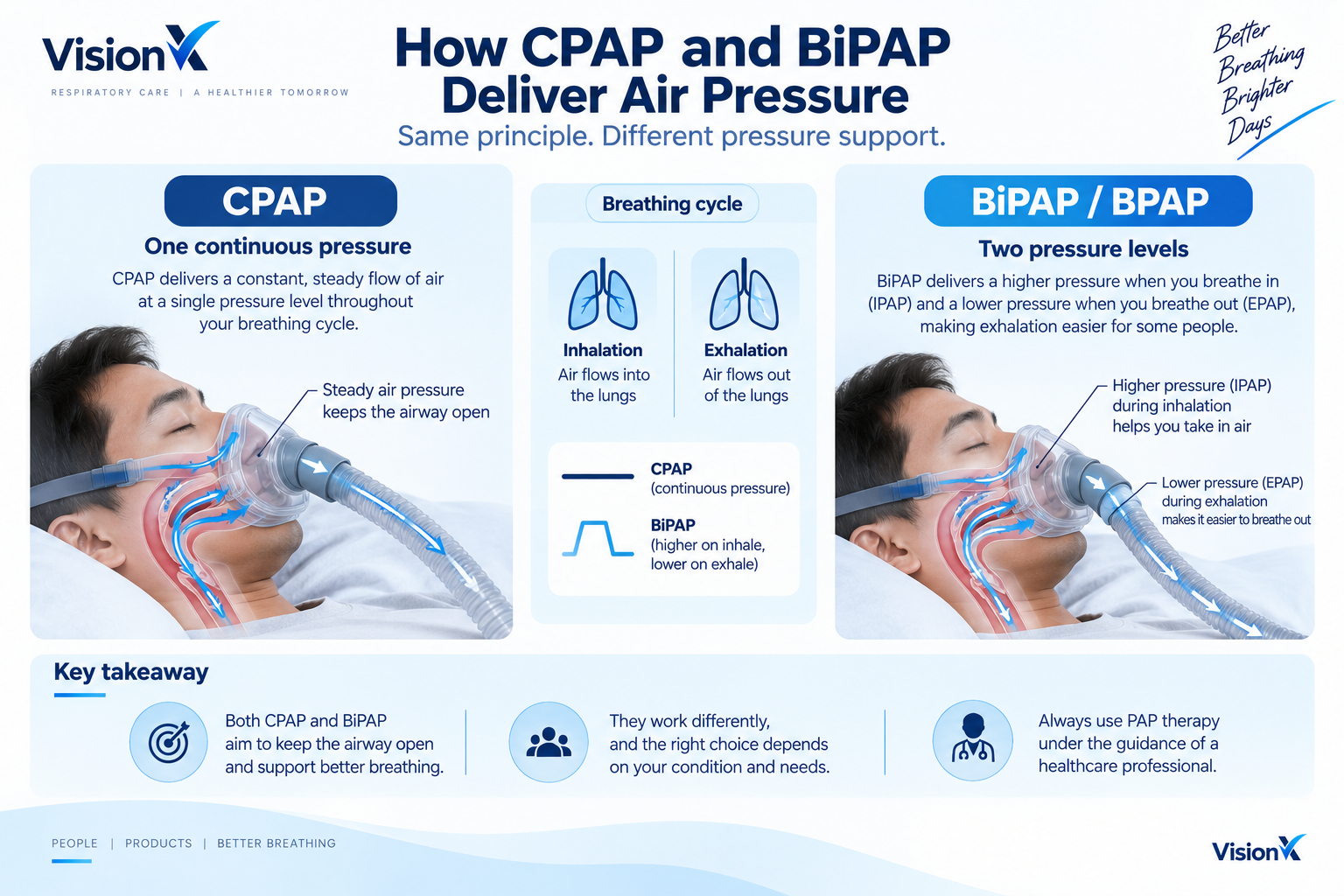
The difference between them is called pressure support:
Pressure support = IPAP − EPAP
Pressure support is more than a comfort feature. In appropriate bilevel modes, it assists inspiratory effort, can increase tidal volume, and can support ventilation and carbon dioxide (CO2) clearance when ventilatory assistance is clinically needed.
That is one of the important differences between ordinary CPAP and bilevel ventilatory support: CPAP primarily works by maintaining airway patency, while appropriately configured bilevel therapy can provide additional support for ventilation.
Common bilevel modes
Bilevel devices can operate in different modes depending on the patient's needs.
- S mode: pressure changes between IPAP and EPAP in response to the patient's spontaneous breathing.
- S/T mode: combines spontaneous breathing with a timed backup rate. If the patient does not initiate a breath within the expected interval, the machine can provide a supported breath.
- T mode: uses timed breaths according to programmed settings rather than relying entirely on spontaneous respiratory effort.
Not every patient needs a backup rate, and the presence of a backup-rate option does not mean it should be enabled without clinical guidance.
CPAP vs APAP vs BiPAP
These terms are sometimes mixed together, but they describe different approaches.
CPAP uses a set pressure.
APAP, or auto-adjusting PAP, automatically varies pressure within a prescribed range in response to breathing patterns and airway events.
BiPAP/BPAP uses separate inspiratory and expiratory pressures and may include additional modes such as a backup rate.
For routine adult OSA, clinical guidelines generally recommend CPAP or APAP rather than BPAP.
Why Would Someone Need BiPAP Instead of CPAP?
There are several reasons a clinician may consider bilevel therapy.
Difficulty tolerating higher CPAP pressures
Some people find it uncomfortable to breathe out against higher continuous pressure. Before moving to bilevel therapy, however, clinicians may review the mask, leaks, humidification, pressure settings, and comfort features.
Many CPAP machines also provide expiratory pressure relief, sometimes called EPR or a similar manufacturer-specific feature.
For example, some devices can reduce pressure during exhalation by 1, 2, or 3 cm H2O. This can make exhalation feel easier for some users.
However, pressure relief is not the same thing as clinical bilevel ventilation.
Expiratory pressure relief is primarily a comfort feature within a PAP system. Bilevel therapy uses separately prescribed inspiratory and expiratory pressures and, in some modes, can provide additional ventilatory support.
Hypoventilation or a need for ventilatory support
Some conditions involve more than upper-airway obstruction. A person may have difficulty moving enough air in and out of the lungs or may retain excessive CO2.
In selected patients, pressure support from bilevel therapy can assist ventilation by increasing the difference between inspiratory and expiratory pressure.
This is one reason BiPAP may be considered when ordinary CPAP does not adequately address the underlying breathing problem.
CPAP vs BiPAP in Different Breathing Conditions
The diagnosis matters more than the machine name.
Obstructive sleep apnea
In OSA, the upper airway repeatedly narrows or closes during sleep.
For routine adult OSA, CPAP or APAP is generally preferred over BPAP. AASM guidelines recommend CPAP or APAP for ongoing OSA treatment and suggest using CPAP or APAP over BPAP in routine cases.
That does not mean BPAP is never used in someone with OSA. A clinician may consider it when there are additional clinical factors, such as difficulty tolerating required pressures or a need for ventilatory support.
Central sleep apnea
Central sleep apnea is different from obstructive sleep apnea because the problem involves reduced or absent respiratory effort rather than simply an obstructed upper airway.
Treatment therefore depends heavily on the underlying cause.
The 2025 AASM guideline includes CPAP among the treatment options for several forms of central sleep apnea. It also supports BPAP with a backup rate for selected CSA etiologies while recommending against BPAP without a backup rate for several CSA categories.
Importantly, the guideline suggests against BPAP without a backup rate for several CSA categories because it can inhibit ventilatory drive and may worsen central apneas, hyperventilation, or hypocapnia.
This is an important reason not to treat "BiPAP" as a single generic therapy. The mode and settings matter.
Obesity hypoventilation syndrome
Obesity hypoventilation syndrome (OHS) involves obesity together with sleep-disordered breathing and elevated CO2 that cannot be explained by another cause.
For stable ambulatory patients with OHS and severe OSA, the American Thoracic Society recommends CPAP as the initial treatment rather than noninvasive ventilation (NIV). Patients who do not have severe OSA, or who do not respond adequately to CPAP, may require a different approach.
This is another example of why BiPAP should not automatically be viewed as the "better" option.
COPD and other respiratory disorders
Bilevel NIV can also be used for conditions involving ventilatory failure.
For example, during an acute COPD exacerbation with acute or acute-on-chronic respiratory acidosis, bilevel NIV can reduce the need for invasive ventilation and improve outcomes. This is an acute medical-care situation and should not be confused with routine home CPAP treatment for uncomplicated sleep apnea.
Is BiPAP More Comfortable Than CPAP?
Sometimes, but not automatically.
Because BiPAP lowers pressure during exhalation, some people find it easier to breathe out against than a higher continuous CPAP pressure.
But comfort depends on much more than pressure.
Common factors include:
- mask type and fit
- air leaks
- nasal congestion
- mouth breathing
- humidification
- pressure settings
- ramp or comfort features
- sleeping position
- noise
- individual tolerance
A poorly fitted BiPAP mask can be less comfortable than a well-fitted CPAP mask.
If CPAP feels uncomfortable, switching immediately to BiPAP is not always the first step. The underlying problem should be identified first.
Common CPAP and BiPAP Side Effects
PAP therapy is generally well tolerated, but adjustment can take time.
Common problems include:
Dry mouth
Dry mouth may occur when air escapes through the mouth, particularly in people using a nasal mask or nasal pillows who also breathe through their mouth.
Mask assessment, humidification, and addressing nasal obstruction may help.
Nasal congestion or a runny nose
Pressurized airflow can contribute to nasal dryness or irritation in some people. Humidification and other adjustments may improve comfort.
Mask leaks
Leaks can cause:
- dry or irritated eyes
- noise
- skin irritation
- reduced treatment effectiveness
- difficulty sleeping
The mask should create a reliable seal without being tightened excessively.
Skin irritation
Pressure from the mask or straps can irritate the bridge of the nose, cheeks, or other contact points.
A different mask size or design may solve the problem.
Difficulty exhaling
Some people find it uncomfortable to breathe out against continuous pressure. Depending on the device and clinical situation, pressure-relief features or a different PAP mode may be considered.
Stomach bloating and gas (aerophagia)
Some PAP users swallow air during therapy. This is called aerophagia and may cause:
- abdominal bloating
- belching
- stomach discomfort
- increased gas
If this occurs, do not simply lower the pressure yourself. Common clinical approaches include reviewing pressure settings, considering an auto-adjusting PAP mode when appropriate, checking mask fit, and addressing other factors that may contribute to swallowed air.
NHLBI advises contacting a healthcare provider if stomach discomfort or bloating occurs with PAP therapy.
Your Mask Matters More Than Many People Realize
The mask is the part of PAP therapy that you interact with every night.
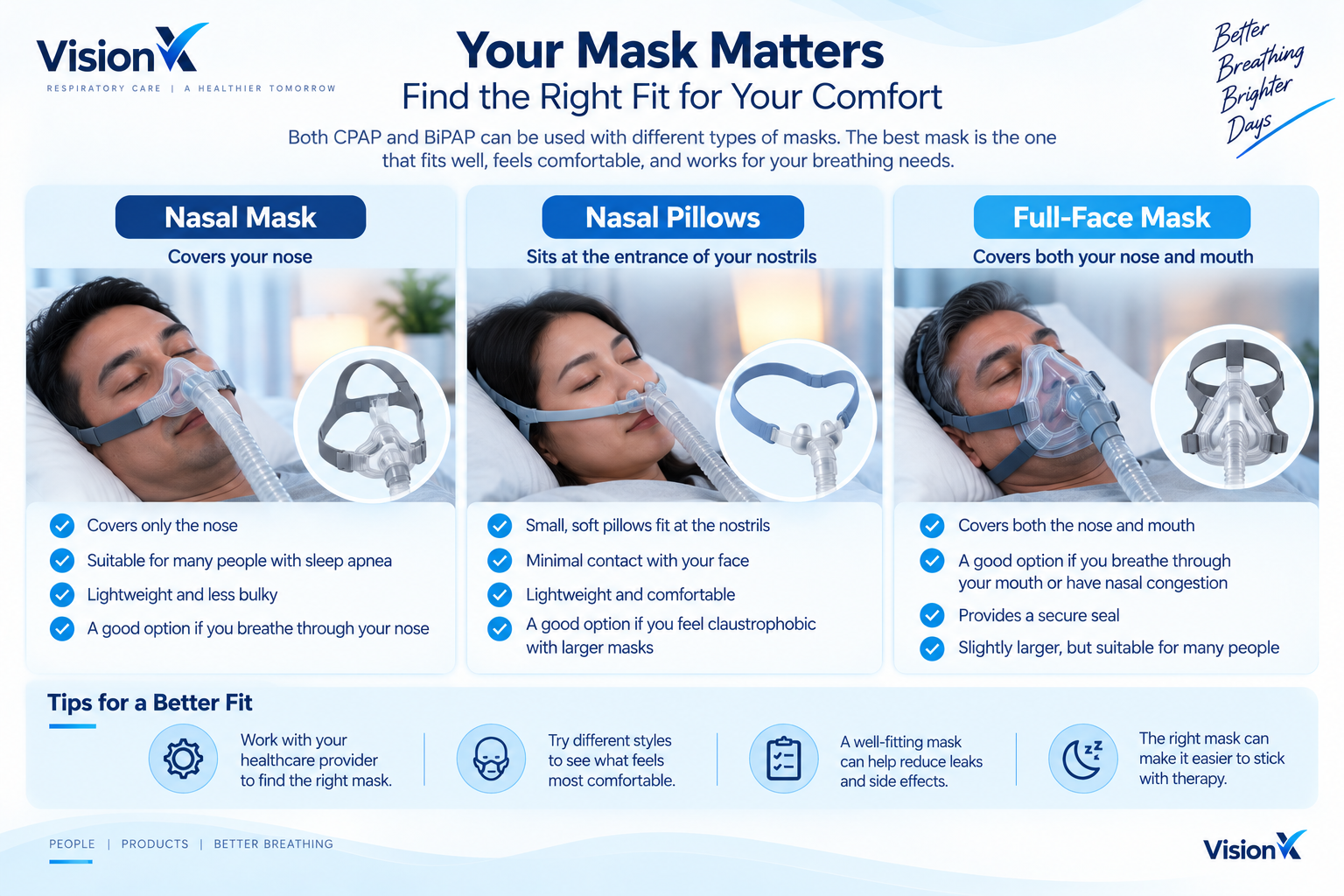
The three broad categories are:
Nasal masks
These cover the nose and are often a practical option for people who primarily breathe through their nose during sleep.
Nasal pillows
These rest around the nostrils and have a smaller overall footprint. Some people prefer them because they leave more of the face uncovered.
Full-face masks
These cover the nose and mouth and may be useful for people who regularly breathe through their mouth or need a broader mask interface.
There is no universally best mask.
The best choice is one that provides a reliable seal, allows comfortable breathing, and works with the person's sleeping habits and facial anatomy.
If the mask leaks, feels painful, or repeatedly wakes you, the solution may be a different size, shape, or mask style rather than a different PAP machine.
What Should You Consider Before Getting a CPAP or BiPAP Machine?
Buying a PAP device is not just a matter of comparing machine specifications.
1. Start with the diagnosis
Know whether the therapy is being used for OSA, central sleep apnea, hypoventilation, COPD-related ventilatory problems, or another condition.
The same machine category can be used very differently depending on the diagnosis.
2. Know which type of therapy was prescribed
Your prescription or clinical plan may specify CPAP, APAP, BPAP, NIV, or another mode.
Do not assume that two machines with similar-looking masks provide the same therapy.
3. Know the prescribed settings
Pressure settings, pressure support, backup rate, timing, and other parameters can affect how a device works.
These settings should not be chosen simply because a machine has a particular maximum pressure or because a higher number appears more powerful.
4. Choose the mask carefully
A good mask fit can make the difference between a therapy that feels manageable and one that becomes difficult to use consistently.
5. Consider humidification
Humidification may improve comfort for people experiencing dryness or nasal irritation.
6. Look at therapy data and follow-up
Modern PAP devices can record information about usage and treatment performance.
Follow-up allows a clinician to determine whether the prescribed therapy is controlling the breathing problem and whether problems such as leaks or persistent events need attention. NHLBI also emphasizes follow-up and review of PAP data when appropriate.
7. Consider servicing and replacement parts
Before obtaining a device, check whether you can reliably access:
- replacement masks
- tubing
- filters
- humidifier components
- batteries or backup power options
- technical support
Long-term usability matters just as much as the initial purchase.
8. Think about buying vs. renting
Rental can make practical sense when PAP therapy is needed temporarily, when the diagnosis or long-term requirement is still being evaluated, or when a person wants to test whether a particular setup works before committing to a purchase.
Buying may make more sense when long-term therapy is already established and the prescribed equipment is known.
For readers in Nepal comparing respiratory-care equipment, VisionX can be a starting point for exploring available respiratory equipment and rental options. The equipment should still be selected around the prescribed treatment plan rather than the other way around.
Can You Switch From CPAP to BiPAP Yourself?
It is better not to.
If CPAP is uncomfortable or does not seem to be working, the problem may be:
- an incorrect mask fit
- excessive leakage
- nasal obstruction
- inappropriate pressure
- difficulty exhaling
- inadequate humidification
- poor adherence
- treatment-emergent central events
- an underlying condition requiring a different mode
A clinician can review symptoms, therapy data, mask fit, pressure settings, and, when necessary, sleep-testing or other clinical information before deciding whether a different PAP mode is appropriate.
Changing pressure or mode without guidance can result in inadequate treatment or inappropriate ventilatory support.
What About Supplemental Oxygen With CPAP or BiPAP?
Supplemental oxygen and PAP therapy are not the same thing.
PAP primarily provides pressure to maintain airway patency and/or support ventilation. Supplemental oxygen increases the oxygen concentration being delivered.
Some patients require both, but oxygen should only be added when clinically indicated and using an appropriate connection method for the specific PAP device.
When oxygen is prescribed with PAP, the equipment instructions and clinical setup matter. Oxygen should be introduced through the appropriate approved connection or port rather than improvised into the tubing.
There is also an important safety rule:
Start the PAP device and establish airflow before turning on supplemental oxygen. When stopping therapy, turn off the oxygen before turning off the PAP device.
Oxygen supports combustion. Smoking, candles, open flames, sparks, and other ignition sources should be kept away from oxygen equipment.
What About CPAP or BiPAP During a Power Cut?
Power interruptions can be a real concern for people who depend on PAP therapy at night.
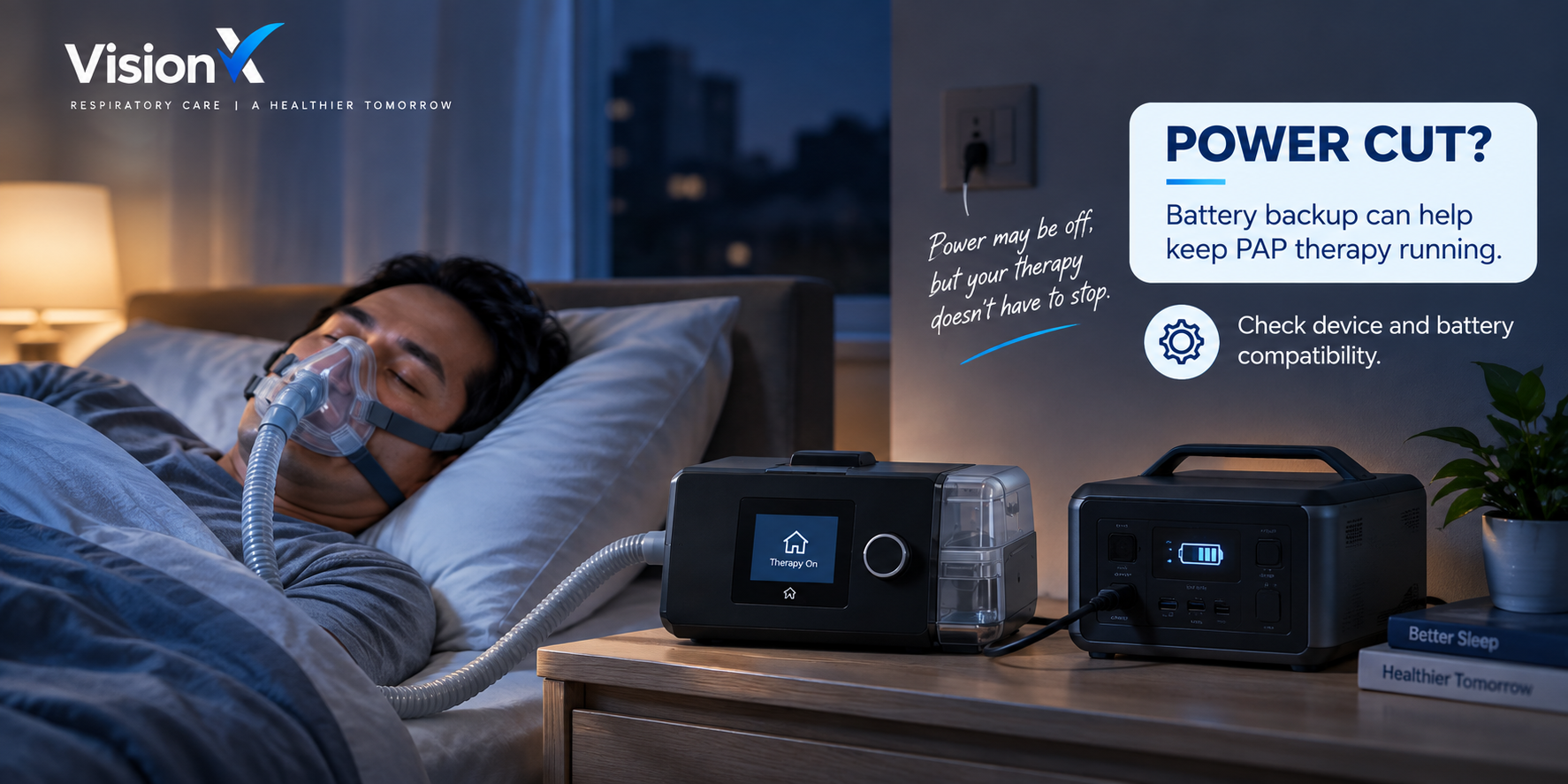
Depending on the device and local electrical setup, possible backup options include:
- an appropriately sized battery system
- an approved DC power solution
- an uninterruptible power supply (UPS)
- an inverter or other suitable backup system
The actual runtime depends on the machine, pressure, battery capacity, humidifier, heated tubing, ambient conditions, and other factors.
One practical way to conserve battery power is to turn off heated humidification and heated tubing during an outage if doing so is safe and comfortable for you. These heating functions can consume substantial power, but the exact savings vary by device and setup.
Do not rely on a generic claim such as "this battery will last X hours" without checking the requirements of your specific PAP machine.
When Should You Talk to a Doctor?
Contact your healthcare provider if:
- your mask repeatedly leaks
- you cannot tolerate the prescribed pressure
- you regularly wake with significant dryness or discomfort
- you develop persistent bloating or stomach discomfort
- you remain excessively sleepy despite using PAP
- your symptoms are not improving
- your device repeatedly reports concerning events
- you believe the prescribed pressure is too high or too low
- you are considering switching from CPAP to BiPAP
- you think you may need supplemental oxygen
Seek urgent medical care for severe or rapidly worsening breathing difficulty, significant chest pain, severe confusion, fainting, or other symptoms suggesting an acute medical problem.
CPAP or BiPAP? Start With the Diagnosis
A useful way to think about the decision is:
Routine OSA → CPAP or APAP is commonly appropriate.
CPAP feels uncomfortable → Review the mask, leaks, humidification, pressure, and comfort settings before assuming BiPAP is needed.
Higher pressure or additional ventilatory support is clinically required → Bilevel therapy may be considered.
Central sleep apnea → The underlying cause and the specific PAP mode matter.
Obesity hypoventilation syndrome → The presence and severity of OSA, response to CPAP, and degree of hypoventilation influence treatment choice.
Acute respiratory failure → This is a medical-care situation, not a routine equipment-selection decision.
The important point is that the machine should follow the clinical need-not the other way around.
BiPAP vs CPAP FAQs
Is BiPAP better than CPAP?
Not generally.
BiPAP is better suited to some clinical situations, while CPAP is the appropriate and effective choice for many people with obstructive sleep apnea.
What is the main difference between CPAP and BiPAP?
CPAP generally provides one continuous pressure. BiPAP provides separate inspiratory and expiratory pressure levels.
Is BiPAP more powerful than CPAP?
Not in a simple sense.
BiPAP can provide pressure support and, in certain modes, ventilatory assistance. That does not make it universally better or stronger.
Is CPAP or BiPAP better for sleep apnea?
For routine adult obstructive sleep apnea, CPAP or APAP is generally preferred over BPAP.
Some people with sleep-disordered breathing have additional clinical needs that make bilevel therapy appropriate.
Why would someone be switched from CPAP to BiPAP?
A clinician may consider bilevel therapy when CPAP is difficult to tolerate at required pressures, when ventilation needs additional support, or when the underlying condition calls for a different PAP strategy.
The reason for switching matters.
Is BiPAP used for COPD?
Yes, bilevel noninvasive ventilation is used in selected people with COPD, particularly during acute exacerbations with hypercapnic respiratory acidosis. This is different from using a standard CPAP machine for uncomplicated OSA.
Can I switch from CPAP to BiPAP without seeing my doctor?
You should not change PAP mode or pressure settings on your own. If your current therapy is uncomfortable or ineffective, have the setup and treatment data reviewed.
Can I use oxygen with CPAP or BiPAP?
Some patients are prescribed supplemental oxygen alongside PAP therapy, but it should be medically indicated and connected using the appropriate equipment and safety procedures.
Is BiPAP a form of life support?
Bilevel positive airway pressure is a form of noninvasive ventilatory support in appropriate modes and clinical situations. It can provide significant breathing assistance without an endotracheal tube.
However, it is not the same as invasive mechanical ventilation through an endotracheal tube.
Whether NIV is appropriate depends on the patient's condition, respiratory status, goals of care, and clinical setting.
The Bottom Line
CPAP and BiPAP are not simply two competing versions of the same machine.
CPAP provides continuous positive airway pressure and is commonly used for obstructive sleep apnea. BiPAP provides separate inspiratory and expiratory pressures and can offer additional pressure support or ventilatory assistance in selected situations.
For routine OSA, CPAP or APAP is generally preferred over BPAP. Other conditions-including certain forms of central sleep apnea, hypoventilation, and acute respiratory failure-may require more specialized approaches.
If your PAP therapy is uncomfortable, ineffective, or difficult to tolerate, the answer is not necessarily a different machine. Sometimes the solution is a better-fitting mask, different humidification, pressure adjustment, or another change to the existing setup.
The right PAP therapy starts with the diagnosis-not the machine name.
Medical Note
This article is intended for general education and should not replace medical assessment or individualized treatment advice.
The appropriate PAP type, pressure settings, backup rate, pressure support, oxygen use, and advanced ventilatory modes should be selected and adjusted by a qualified healthcare professional based on the individual's diagnosis and clinical needs.
If breathing becomes severe or rapidly worsens, seek urgent medical care rather than attempting to change PAP settings yourself.